Every week, people in the Kingdom face the same urgent legal problems: an unpaid salary, a missing deposit, a hidden business partner, or a family inheritance dispute. Most of these problems have a clear legal answer, but many people do not know their rights or where to start. At AlKhorayef Law Firm, we help residents, expats, and businesses solve these exact issues every day. Below, we answer the most common real-life legal questions in simple language. This is general guidance, so for your own case, please contact us for advice that fits your situation.
Labour and Employment Problems
Saudi Arabia updated its Labour Law in 2025 (effective 19 February 2025), adding stronger worker protections, a clear resignation process, and mandatory digital contracts through Qiwa. We explain the wider picture in our guide to Saudi labour law compliance and employee disputes.
1. My Employer Is Withholding My Passport What Are My Legal Rights?
Keeping your passport or Iqama against your will is not allowed in Saudi Arabia, and employers who do this can face fines. Your documents belong to you. You can demand their return and file a complaint through the Qiwa platform, and our team at AlKhorayef Law Firm can support you through the process.
2. My Saudi Employer Hasn’t Paid My Salary for 2 Months What Can I Do?
You can file a labour complaint online through the Qiwa platform using your Iqama number, with no need for a lawyer to start. A conciliation officer will contact both sides, usually within a few working days. If salaries stay unpaid, the law lets you escalate the matter, and in some cases transfer to a new employer. We can manage the full claim for you.
3. My End of Service Gratuity Was Calculated Wrong How to Fight It
Your end of service benefit is based on your final wage and your years of service, and it is a common source of mistakes. If you were dismissed without a valid reason, you may also claim extra compensation. We review the numbers, gather the proof, and challenge a wrong calculation through the labour courts.
4. Fired Without Warning in Saudi Arabia: Do You Have a Case?
Maybe. An employer cannot end your contract unfairly, and the 2025 reforms ban discrimination based on gender, age, nationality, disability, and marital status. If your dismissal was unfair, you may be entitled to compensation. We assess whether you have a strong wrongful-termination claim before you act.
5. My Employer Filed Huroob (Absconding) Against Me Falsely What Are My Rights?
A false Huroob report is a serious matter, and employers who file one wrongly can face penalties. You do not have to accept it. You can challenge the report through the labour courts and clear your record. We help workers fight false Huroob reports and protect their status.
6. I Was Reported as a Runaway (Huroob) Can I Clear It Without My Employer?
Yes. You can file a labour complaint and ask the court to cancel a wrongful Huroob report without your employer’s consent. Many workers do not know this is possible. With the right legal steps, the report can often be reversed.
7. My Employer Is Making Me Work a Second Job Not in My Contract Is That Legal?
No. Under Saudi labour law, your employer cannot force you to do work outside what is written in your contract without your agreement. Your registered Qiwa contract sets the limits of your duties. If you are being pressured, we can raise the issue formally.
8. My Iqama Wasn’t Renewed Who Is Responsible, Me or My Employer?
Your employer is legally responsible for renewing your Iqama and for paying the related government fees. If you face fines or problems because the employer failed to renew it, you have legal recourse. We help workers recover losses caused by an employer’s failure to act.
9. My Employer Forced Me to Sign a Blank Contract What Can I Do?
Employment contracts must now be documented and registered on the Qiwa platform to be properly recognized. A blank or incomplete contract leaves you exposed, but it also gives you grounds to complain. We help you establish your real terms and file a claim.
10. I Quit My Job in Saudi Arabia Will I Lose My End of Service Benefits?
Not always. Under the 2025 rules, employees can resign with proper notice, and your end of service benefit is paid on a sliding scale based on your years of service. If your employer broke the contract first, you may keep your full rights. We confirm exactly what you are owed.
11. My Employer Is Deducting Money From My Salary Without My Consent Is That Legal?
No. Deducting from your wages without your written agreement or a lawful reason is not allowed. You can file through Qiwa to recover money taken unfairly. We build the claim and represent you so the deductions are returned.
12. I Was Injured at Work Who Pays My Medical Bills and Compensation?
Your employer is responsible for the cost of a work injury, and work-injury cover usually runs through the social insurance (GOSI) system until you recover or a disability is confirmed. Many workers wrongly pay these costs themselves. We help you claim the medical care and compensation you are owed.
13. My Employer Paid Me Less Than the Offer Letter Promised What Are My Options?
Your binding salary is the one in your registered Qiwa employment contract. A gap between the offer letter and your real pay can be a labour violation. We help you prove the agreed figure and recover the difference.
14. I Left Saudi Arabia on Final Exit but My Employer Never Paid My Dues Can I Still Sue?
Yes. You can still file a labour claim after leaving the Kingdom by appointing a legal representative to act for you. This is very common for workers who returned home with unpaid dues. AlKhorayef Law Firm can pursue your claim while you are abroad.
15. My Work Visa Category Doesn’t Match My Actual Job Who Is at Legal Risk?
Both sides can be at risk. Employers who place a worker in a role outside their permitted category can face fines, and the worker may also face penalties. If you were put in this position without knowing, we can advise on how to correct your status safely.
16. I’m on a Saudi Re-Entry Ban. Can I Appeal It and Come Back?
Often, yes. Many bans, especially those linked to a wrong Huroob report or an administrative error can be challenged through the Ministry of Human Resources and Social Development. The window to act can be short, so we move quickly to contest it.
17. My Employer Threatened to Cancel My Visa If I Complained What Protections Do I Have?
Punishing a worker for filing a complaint is itself a violation. Filing through Qiwa creates an official record that an employer cannot easily erase. We help you complain safely and protect you from retaliation.
18. My Employer Died What Happens to My Visa and Job?
When a sponsor passes away, the sponsorship is affected and you usually have a limited window to transfer to a new employer or arrange your exit. This sudden change worries thousands of workers each year. We guide you through transferring sponsorship or leaving lawfully.
If you face any of these issues, our litigation services in Saudi Arabia team is ready to act, and our guide to how legal advice protects your business shows why early help matters.
Business and Commercial Problems
Partnership and contract disputes are rising fast as more companies launch under Vision 2030. A commercial lawyer in Saudi Arabia can protect your interests before a small problem becomes a costly one.
19. My Business Partner Is Blocking My Access to Company Accounts What Are My Rights?
As a shareholder or partner, you have rights to information and to your share of the company. If a partner shuts you out, the law gives you ways to demand access and challenge the conduct. We move fast to protect your stake and stop further harm.
20. My Saudi Business Partner Is Hiding Company Profits What Legal Steps Can I Take?
Hiding profits between partners can amount to fraud or commercial concealment. You can demand an audit, request company records, and take the matter to court. We help you uncover what is owed and recover it.
21. I Signed a Contract in English Which Version Is Actually Binding?
If your dispute reaches a Saudi court, the Arabic version of a contract is generally treated as the controlling version, even if you negotiated the deal in English. This surprises many foreign business owners. We review and align both versions before you sign, as explained in our guide to essential contract clauses for Saudi business.
22. A Client Signed the Contract Then Refused to Pay What Are My Legal Options?
You can recover commercial debt through the Saudi courts and then enforce the ruling. Many businesses give up too early without knowing this. Our debt collection in Saudi Arabia and B2B debt collection services pursue the money owed to you.
23. My Partner Changed the Company Bank Account Without My Knowledge What Can I Do?
A partner who moves company funds or control without proper authority may be acting unlawfully. As a minority partner, you still have legal remedies. We help you challenge the action and secure the company’s accounts.
24. A Supplier Delivered Defective Goods Can I Sue for Damages?
Yes. Under the Civil Transactions Law, you can claim for goods that do not meet the agreed standard. Often a strong legal notice alone resolves the matter without a full case. We assess your contract and act on it.
25. My Foreign Business Partner Wants to Exit the Joint Venture What Are My Rights?
A joint venture exit without an agreed procedure can create liability and asset disputes. Your rights depend on your shareholder agreement and the company structure. We help you manage the exit and protect the business.
26. I Won a Court Case but the Other Side Refuses to Pay How Do I Enforce It?
Enforcement is a separate legal step. The execution court can freeze bank accounts and seize assets to satisfy your judgment. We handle this through our enforcement services in Saudi Arabia, including matters under Saudi Arabia’s 2026 Enforcement Law and even enforcing a foreign debt judgment.
27. Can My Competitor Steal My Clients After Our Contract Ends?
A properly drafted non-compete clause can be enforced in Saudi Arabia, usually for up to two years, covering clients, trade secrets, and competing work. The problem is that most owners never add this clause. We draft strong protections into your contracts.
28. A Government Project Owes My Company Money How Do I Sue a Government Entity?
Disputes with government bodies are usually heard by the Board of Grievances (Diwan Al-Mazalim), not the ordinary courts. Many contractors do not know this and file in the wrong place. We take your case to the right forum and pursue payment.
29. My Business License Was Suspended Can I Appeal and Keep Operating?
Often, yes. A license suspension can frequently be appealed or reversed through the Ministry of Commerce. Do not close your business before checking your options. We help you challenge the decision and protect your operations.
30. A Company Stole My Brand Name What Can I Do?
You can act against trademark and brand theft through the Saudi Authority for Intellectual Property (SAIP). Registering and defending your mark is essential as the startup market grows. We help you protect and enforce your brand.
31. I’m a Freelancer Do Contracts Actually Protect Me If a Client Disappears?
Yes, and written contracts are your strongest protection. For larger money claims, Saudi rules of evidence give clear weight to written agreements over informal chats. We help freelancers put proper contracts in place so they are not left exposed.
32. My Partner Is Running a Competing Business Using Our Company Resources Is That Legal?
No. Using company resources to run a rival business can be fraud or a breach of duty. You have grounds to act and recover losses. We investigate and build the case against the partner.
33. How Do I Legally Exit a Bad Business Partnership Without Losing Everything?
Saudi Companies Law provides structured ways to dissolve or exit a partnership, rather than simply walking away from your investment. The right route protects your money and limits your liability. Our corporate lawyers in Saudi Arabia plan a clean exit, and our guide on how to set up a company in Saudi Arabia helps you start the next one correctly.
Real Estate, Property, and Construction Problems
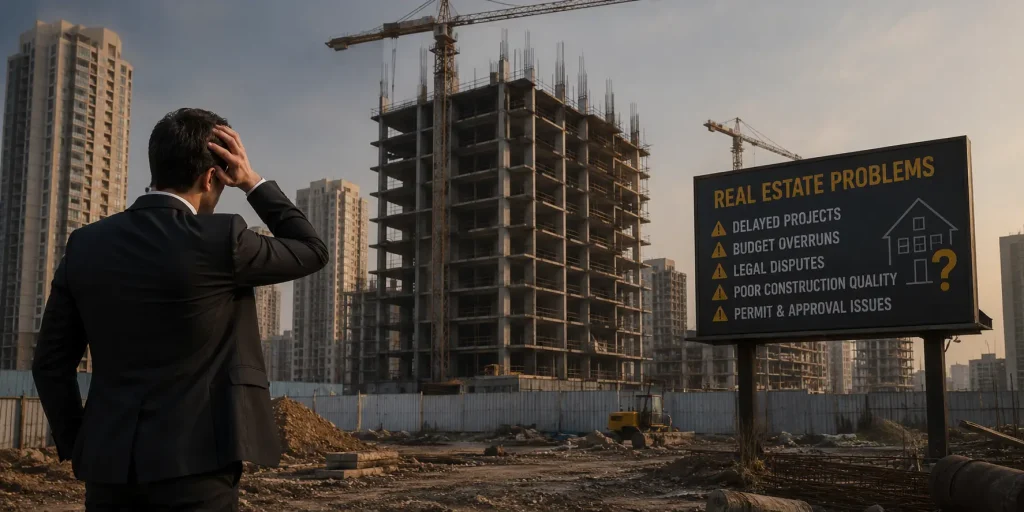
Property and construction disputes are among the most common cases in the Kingdom. Our attorney services for real estate cover buying, selling, leasing, and disputes from start to finish.
34. The Construction Company Took My Money and Abandoned the Project What Now?
This is a breach of contract, and you can claim back your money and damages. Delays and abandoned work are common flashpoints in Saudi construction. We act quickly to secure your position and pursue the contractor.
35. Buying Property in Saudi Arabia as a Non-Saudi: What Can Go Wrong?
The biggest risk is buying without full legal due diligence, especially hidden title problems. Many buyers rely only on surface checks. We carry out proper checks before you pay, so you do not inherit someone else’s dispute.
36. The Contractor Built It Wrong Can I Sue for Defective Construction?
Yes. When the work does not match what was agreed, you can claim for the defects and the cost to fix them. This is a leading cause of construction conflict. We feed these matters directly into our litigation services in Saudi Arabia team.
37. I Bought an Off-Plan Property and the Developer Disappeared What Are My Options?
Disputes over unbuilt, off-plan property are common, and you have legal routes to recover your money or enforce delivery. Do not assume the loss is final. We pursue developers and protect off-plan buyers.
38. My Landlord Refused to Return My Deposit Is That Legal?
Tenants have enforceable rights, and deposit disputes are handled through the dedicated real estate dispute channels. Most tenants simply never claim. We help you recover your deposit properly.
39. The Property I Bought Has a Hidden Title Dispute Can I Get My Money Back?
Possibly. Title disputes from weak due diligence are a top cause of real estate litigation, and buyers often have more options than they think. We assess your purchase and pursue the right remedy.
40. My Construction Contract Has a Force Majeure Clause Does It Actually Protect Me?
Maybe not as you expect. Force majeure and hardship are read differently under the Saudi Civil Transactions Law than in many Western contracts. We explain what your clause really covers before a delay turns into a dispute.
41. My Contractor Is Demanding 40% More Than the Agreed Price Do I Have to Pay?
Usually not. Under Saudi law, a party cannot simply demand more than a fixed contract price unless specific conditions are met. We review your contract and push back on unjustified demands.
42. My Neighbour Built a Wall That Encroaches on My Property What Are My Options?
Boundary and encroachment disputes are handled through real estate dispute resolution. You have the right to protect your land. We gather the survey evidence and act to stop or remove the encroachment.
43. I Own Property as a Non-Saudi What Happens to It If I Have to Leave the Country?
Non-Saudi ownership follows specific rules, and your options on leaving depend on those conditions. Planning ahead protects your asset. We advise on holding, selling, or transferring your property correctly, and on related asset management in Saudi Arabia.
44. The Building I Bought Has Serious Defects Can I Sue the Developer After Handover?
Yes, in many cases. Saudi law gives buyers rights against developers for defects, and the liability period for serious structural defects can extend for years after handover. We confirm whether your claim is still open and act on it.
Family and Inheritance Problems

Inheritance in Saudi Arabia follows Islamic (Faraid) law, which sets fixed shares for heirs. Our guide to inheritance and wills for families and expats explains how this works.
45. My Father Died Without a Will How Is His Estate Divided?
Under Islamic inheritance law, the estate is divided into fixed shares among the heirs, and this applies automatically. Families often clash because the shares are set by law, not personal wishes. We help heirs understand their shares and settle the estate fairly.
46. My Siblings Are Refusing to Sell the Inherited Family Property Can I Force a Sale?
You cannot be forced to keep an asset you no longer want. When heirs disagree, a court can order the property to be divided or sold. We help break the deadlock so you can access your share.
47. My Ex-Husband Isn’t Paying Child Support How Do I Enforce It?
Child support (Nafaqa) is a legal obligation that the courts can enforce. Many mothers, especially expats, never pursue it because they think it is hopeless but it is collectable. We help you claim and enforce the support owed to your children.
48. I’m a Foreign Wife. What Are My Rights in a Saudi Divorce?
Expatriate women in a Saudi divorce face real questions about custody, financial rights, and residency. You do have rights, and they are worth protecting. We guide foreign wives through the process with care and clarity.
49. My Father Transferred All His Property to One Child Before Dying Can the Other Heirs Challenge It?
Possibly. Transfers made to defeat the inheritance rights of other heirs can be challenged in court. These cases are sensitive and fact-specific. We review the transfers and advise on your strongest position.
50. I Was Left Out of My Family’s Inheritance Do I Have Legal Recourse?
Yes. Under Islamic inheritance law, certain heirs have fixed entitlements that cannot simply be removed by a will or a family decision. If you were excluded, you may be able to enforce your share in court. We help you claim what is legally yours.
How AlKhorayef Law Firm Can Help
Whatever your problem is, a labour dispute, a business partner, a property deal gone wrong, or an inheritance conflict, you do not have to face it alone. At AlKhorayef Law Firm, we give clear advice, protect your rights, and take action through the right courts and authorities. As trusted legal advisors in Saudi Arabia, we handle each case with care and skill. Explore our full range of legal services, learn more about our firm, or contact us today to discuss your situation.
This article is for general information only and does not replace legal advice. For guidance on your specific situation, please contact AlKhorayef Law Firm.